
 CONFERENCE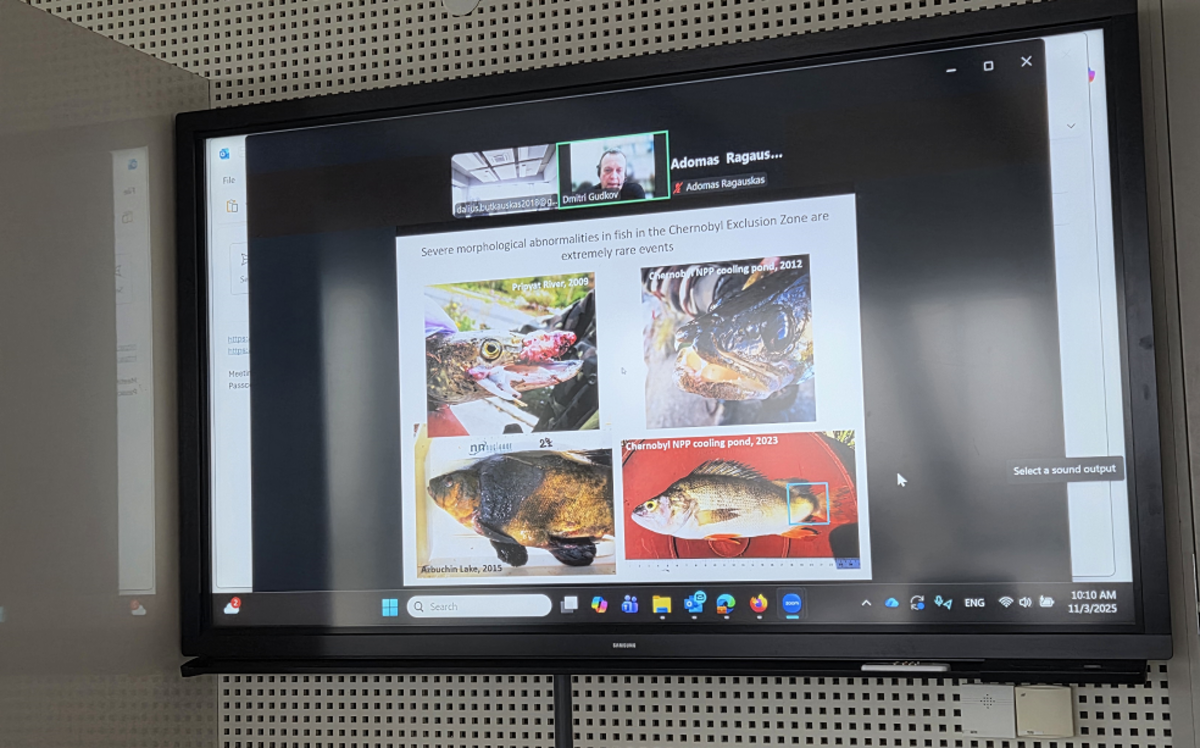
Partners: University of Latvia and Institute of Hydrobiology of the National Academy of Sciences of Ukraine.
The project aims to utilize the project applicant's previously validated ecosystem quality assessment and genome research methods (mitochondrial D-loop region and ATP-6 gene, iPBS retrotransposon based markers). The study will be based on genome research and mutual comparison of individuals from populations of two fish species - perch and roach - in Latvia and the Chernobyl region of Ukraine. The main goal of the study is to develop an informative and relatively inexpensive method for determining the impact of radiation on a fish model system. The developed method will serve as a foundation for further studies of changes in gene functionality caused by environmental changes, assessing changes in gene methylation and movement of mobile genetic elements within the genome.
Short description of the seminar dedicated to implementation of the joint Latvian - Ukrainian project “ASSESSMENT OF THE IMPACT OF RADIO-CONTAMINATION ON PERCH AND ROACH GENOMES BASED ON SENSITIVE GENETIC MARKERS”
The seminar was carried out on 3.11.2025, at 9:30 AM, Jelgavas iela 1, auditorium 701 (University of Latvia, Riga). Colleagues with whom the project group has close collaboration on the project's theme in the Baltic States were also invited to the open project seminar. Consequently, the seminar was also attended by Adomas Ragauskas, a leading researcher from the Nature Research Centre (Lithuania); Agnija Skuja, a leading researcher from the UL IB Hydrobiology Laboratory, and researcher Dāvis Ozoliņš; and Īzaks Rašals, UL FMLS Professor of Genetics and UL students, those interested in the project's theme.
The leader of the project partner from Ukraine Prof., D.Sc. Corresponding Member of the NAS of Ukraine, Head of Department of Aquatic Radioecology Institute of Hydrobiology of the NAS of Ukraine Dmitri Gudkov join the seminar online and presented material about study area in Ukraine including heavy contaminated by radio-nuclides zone from which material for molecular studies was collected. Samples, collected in Ukraina were transferred to University of Latvia by the perticipant of the project from Ukrainian side PhD student Irina Marushchak. She participated in the seminar during her short scientific visit tu LU and presented results of investigation including different plant species, collected in Chernobyl zone with fixed genotoxic effects captured by microscopic observations.
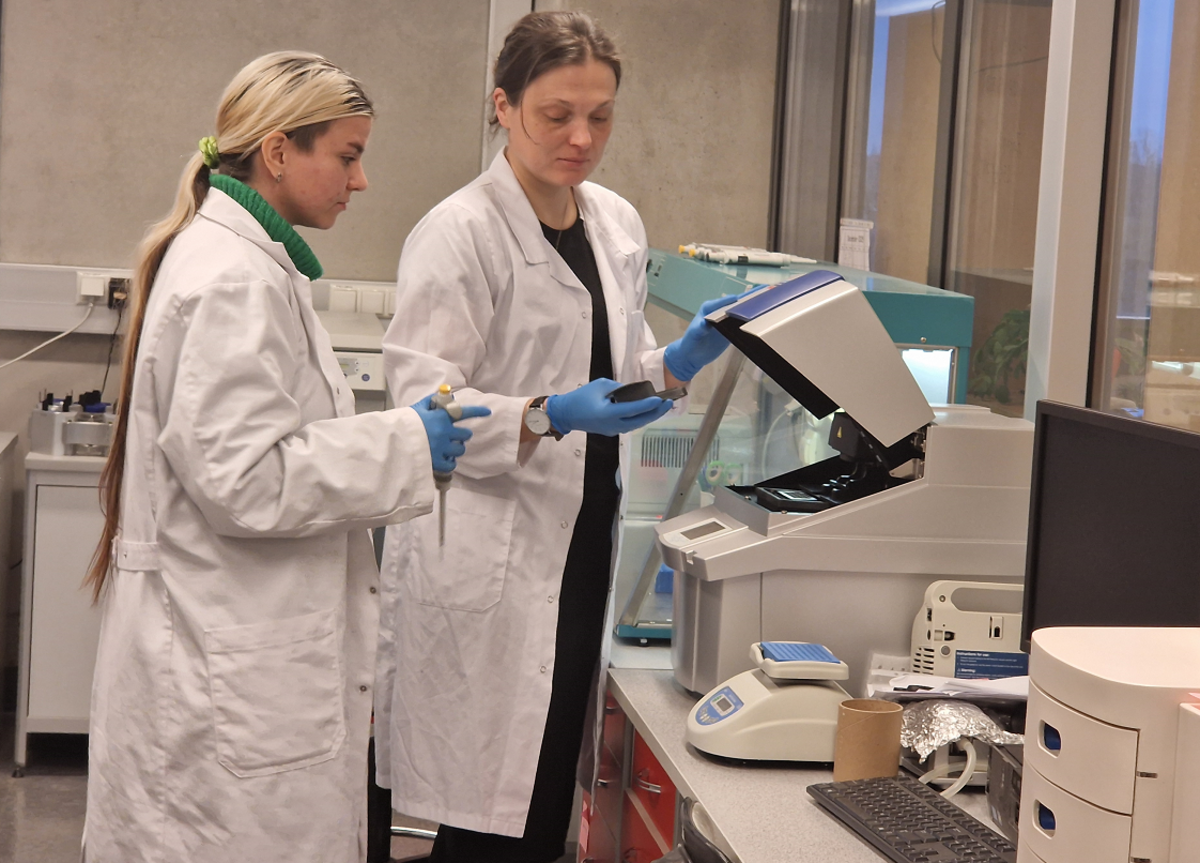
Dr. biol. Dalius Butkauskas moderated seminar and presented material related with comprehensive genetic studies of perch and roach specimens collected in different water bodies located in Lithiuania and Latvia. Methods that were established during these studies includingamplification and sequencing of D-loop and ATP-6 fragments of mtDNA and following molecular analysis will be applied implementing current joint study of Latvian and Ukrainian scholars. The possibility to compare genetic profile of fish populations inhabiting anhropogenically affected zones focusing on fish populations inhabiting water bodies heavily transformed by thermal and chemical polution in relation with nuclear pover plant operation and especially zones affected by radio contamination as a consequence of industrial disaster will help to reveal changes and possible adaptation potential of perch and roach as two model fish species abundant in the study area. During the seminar information about ecological and molecular studies of chosen fish and some plant species inhabiting freshwater bodies in the Eastern Baltic region (Lithuania and Latvia) and Ukraine was presented. The main purpose of the project is the establishment of molecular database as a background that will help to carry on the assessment of the status of fish populations survived in heavily contaminated by radionuclides zone of Chernobil disaster on regular way encompassing and processing essential ecological and molecular data representing affected and relatively unaffected regions to help find out most optimal decissions for resilience of affected regions.
